If you’ve been working in digital for a while, you’ll know we’re in a strange place right now. On one hand, formats are more exciting than ever: swipeable ads, parallax, rich media that people actually want to play with. On the other, the industry is staring down the cookieless future and asking: how are we supposed to keep campaigns performing without all that audience data we’ve relied on for years?
The answer might just be the oldest trick in the book: priming.
Priming is basically about getting people ready to notice you. Show them your brand once, in the right way, and even if they don’t consciously remember it, they’re more likely to respond when they see you again. It’s the reason someone clicks on your banner later, even though the “real work” might have been done by that rich media unit they saw first.
And it matters more than ever right now!
Research from JCDecaux makes the case clearly, when cookies are stripped away, awareness drops by 40% and CTR halves. But when people had already been primed with earlier brand exposures, awareness levels didn’t dip, they stayed almost as strong as if cookies were still in play. (JCDecaux, 2025).
So while a cookieless world might sound like bad news, the real takeaway is that smart creative and smart sequencing can carry the load.
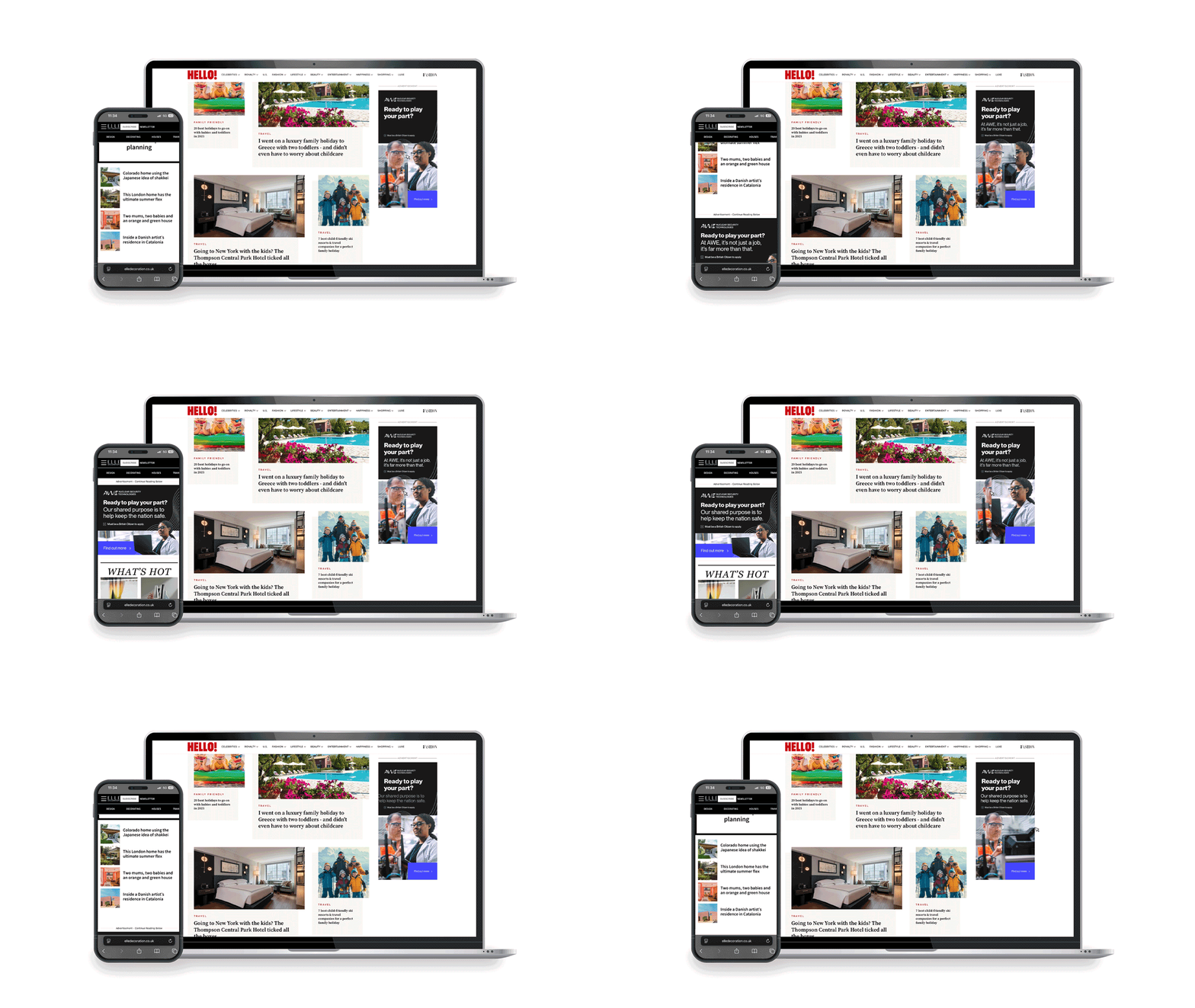
We’ve seen this in our own display campaigns. When we put rich media formats (like swipeable carousels or parallax ads) alongside traditional banners, performance doesn’t just improve a little, it leaps:
CTR more than triples
CPCs drop by 60%
Delivery improves across premium environments
Even standard banners benefit from the priming effect
It’s easy to think banners do the heavy lifting on their own, but the truth is they’re riding on the halo of those high-impact formats. The interactive ad gets attention, builds memory, and sets the stage. The standard banner just happens to be in the right place at the right time.
Priming doesn’t stop with display formats. OOH can do the same job, and in some cases even better. JCDecaux found that digital ads primed by OOH received 37% more attention.
Think about it: someone spots your campaign on a huge roadside screen during their commute. Hours later, they scroll through their phone and see your banner. It’s not their first encounter anymore, their brain has already logged your brand once, so the digital ad will naturally have a better impact.
So what does this mean for planning? It means flipping the usual thinking on its head. Instead of seeing “premium” formats as expensive extras, treat them as the engine of your campaign. They grab the attention and plant the memory. Then banners, with all their cost-efficient scale, come in to harvest the results.
The best strategies now:
Start with attention-grabbers — rich media or OOH that people can’t help but notice.
Follow with banners — scale up reach and clicks at lower cost.
Look at the mix — measure how formats work together, not just in silos.
Priming works because people don’t respond to ads in isolation, they respond to a sequence of touches that shape recognition, familiarity, and trust. In a cookieless world, this effect goes from useful to essential.
If we start treating those priming moments as the foundation rather than the extras, we’ll not only protect performance without cookies, we’ll run smarter, more efficient campaigns overall.